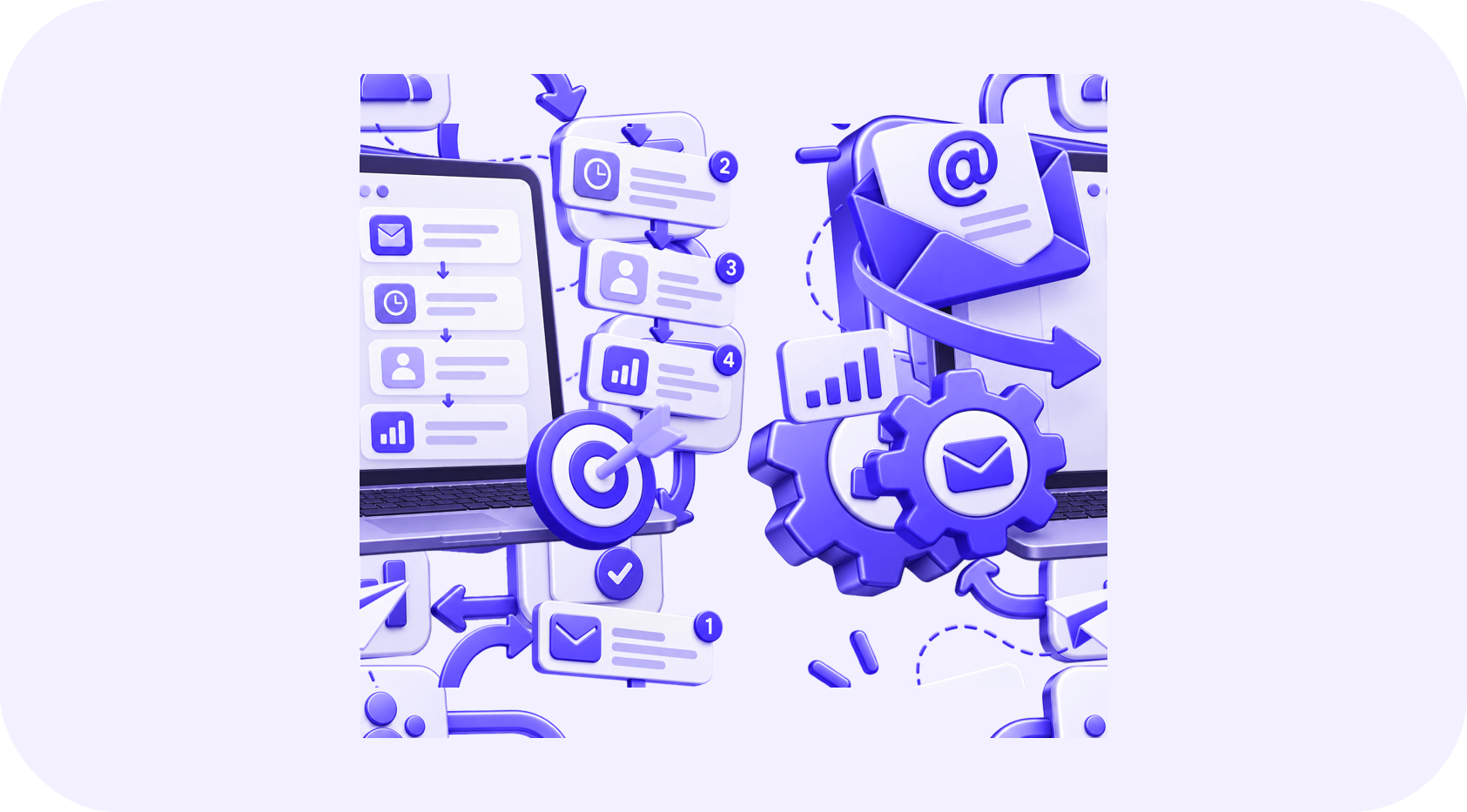
Email automation is often treated as a way to send more messages with less work. That is a limited view.
The real purpose is to deliver relevant information when a person reaches an important point in the customer journey. A useful sequence can welcome a new lead, answer common concerns, prepare a customer for onboarding, or reconnect with someone whose interest has returned.
Automation should support the relationship, not overwhelm the inbox.
The right email at the right moment is more valuable than a large sequence sent without context.
01Build the Foundation First
Before creating sequences, make sure your system can answer four questions:
- Who is this person?
- What did they request or do?
- What stage are they currently in?
- What is the most useful next action?
Clean contact data, clear consent, reliable CRM stages, and proper tracking are more important than advanced templates. If the information is wrong, personalization can make the message feel less trustworthy rather than more personal.
021. New Subscriber Welcome Sequence
Trigger this sequence when someone knowingly joins your email list.
The first email should deliver what was promised and explain what the subscriber will receive. Later messages can introduce the company, share helpful resources, and invite the person to choose topics or preferences.
Do not begin with several aggressive sales emails. First prove that joining the list was useful.
032. New Lead Response Sequence
This sequence starts after a consultation request, quotation form, assessment, or other high-intent action.
The first message should confirm the request, set expectations, and provide a clear booking or response option. Internal notifications and salesperson tasks should run alongside the emails.
Stop the sequence when the lead replies, books, becomes unqualified, or requests no further contact.
043. Educational Lead-Nurture Sequence
Not every lead is ready to buy. A nurture series can help the person understand the problem, possible approaches, common risks, and what a successful solution requires.
A useful structure is:
- Clarify the business problem
- Explain why common approaches fail
- Share a practical framework
- Provide a relevant example
- Invite the reader to discuss their situation
Each email should be valuable on its own.
054. Behavior-Based Interest Sequence
Start this sequence when a contact shows meaningful interest, such as visiting a service page several times, attending a webinar, downloading a detailed guide, or clicking a specific topic.
Use the behavior to select relevant content, but avoid language that makes the reader feel watched. The goal is to continue the topic naturally, not announce every tracked action.
065. Appointment Preparation Sequence
Once an appointment is booked, stop general acquisition messages. Send confirmation, preparation details, a short reminder, and an easy way to reschedule.
Include:
- Date, time, and time zone
- Meeting location or link
- Expected duration
- What will be discussed
- What the attendee should prepare
- Rescheduling and cancellation options
This improves the experience and gives the meeting a clearer purpose.
076. No-Show Recovery Sequence
A missed appointment does not always mean a lack of interest. The person may have faced a conflict, forgotten the time, or had a technical problem.
Send a respectful message that makes rescheduling simple. High-value opportunities may also create a personal call task. Limit the number of reminders and move unresponsive contacts into a suitable long-term segment.
087. Proposal Follow-Up Sequence
After sending a proposal, confirm that it arrived and explain the best way to ask questions. Later messages may address common decision concerns or clarify the next step.
Do not pretend that an automatic email is a personal check-in from the salesperson. Combine automation with personal tasks, and stop the sequence when the deal status changes.
098. Customer Onboarding Sequence
The sale is not the end of the journey. A structured onboarding series can reduce confusion and help the customer receive value faster.
Send welcome information, access instructions, responsibilities, key dates, support contacts, and progress reminders. Coordinate these emails with the real delivery process so the message never promises something the team has not completed.
109. Customer Education and Adoption Sequence
For software and ongoing services, customers may not discover important features or processes on their own. Use product activity, account stage, or service milestones to send focused guidance.
Avoid sending beginner instructions to advanced users. Segment by plan, role, activity, or goal whenever the data is reliable.
1110. Re-Engagement and Win-Back Sequence
This sequence is for subscribers or customers who have become inactive. Remind them of the value, show what has changed, or ask whether they still want to hear from you.
If there is no response, reduce frequency or remove the contact according to your retention policy. Continuing to email an uninterested audience damages engagement and trust.
12Match Triggers to Real Events
| Trigger | Suitable sequence |
|---|---|
| Newsletter signup | Welcome series |
| Consultation form | New lead response |
| Content download | Educational nurture |
| Appointment booked | Preparation and reminders |
| Appointment missed | No-show recovery |
| Deal won | Customer onboarding |
| Reduced product activity | Adoption or re-engagement |
13Prevent Over-Automation
A contact may qualify for several sequences at the same time. Establish priority rules so operational messages, sales conversations, and marketing campaigns do not conflict.
- Create global frequency limits.
- Pause promotions during active sales discussions.
- Suppress customers from lead-acquisition sequences.
- Stop sequences after replies and conversions.
- Respect unsubscribe requests across connected systems.
- Separate transactional messages from marketing consent.
14Measure Business Outcomes
Opens can be useful for troubleshooting, but they are not a dependable business outcome by themselves. Focus on:
- Replies and qualified conversations
- Appointment bookings and show rate
- Movement between CRM stages
- Completed onboarding actions
- Product or service adoption
- Revenue influenced by the sequence
- Unsubscribe and complaint rates
- Delivery failures
Test one meaningful change at a time, such as the offer, timing, subject line, or call to action.
15Create Communication People Want to Receive
Successful email automation feels timely because it responds to a real need. It uses customer information responsibly, makes the next step easy, and stops when the context changes.
Build the most important sequence first, connect it properly to your CRM, and improve it using real results. Ten disconnected sequences will never outperform one journey that genuinely helps the reader.
Written by
The InvexTech Team
We design and build AI, CRM and software systems for growing businesses, and write about what we learn doing it.