Phone calls remain important for businesses where customers want a quick answer, personal guidance, or immediate scheduling. The challenge is that calls do not arrive only when staff members are free.
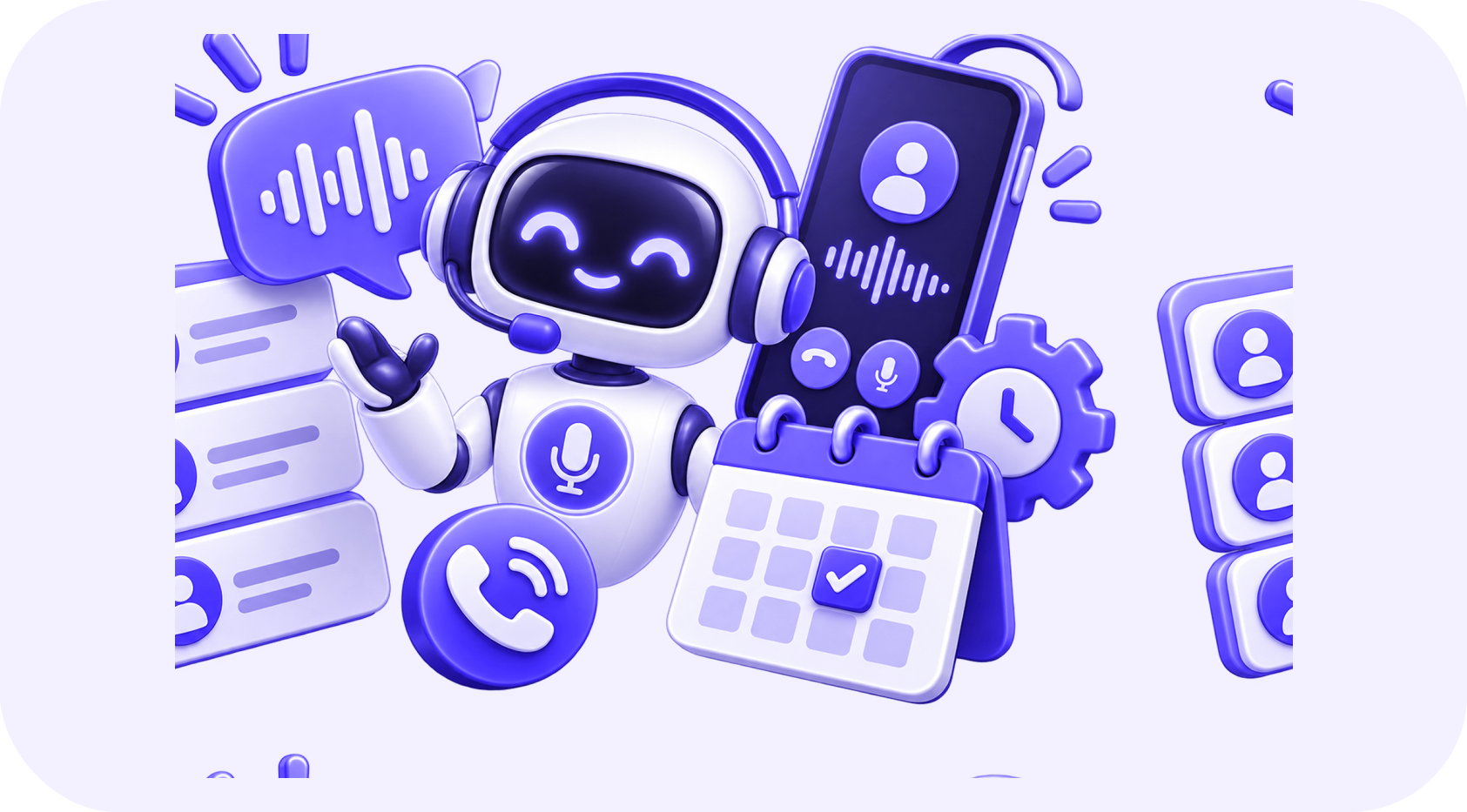
An AI voice agent can answer common calls, collect information, qualify inquiries, schedule appointments, and record the outcome in a CRM. It can support busy teams and provide after-hours coverage, but it should not be treated as a complete replacement for human communication.
The right design begins with a limited purpose and a clear handoff process.
Voice AI should make it easier to reach the business, not trap callers inside an automated conversation.
01Where Voice Agents Create Value
Voice automation works best when the conversation has a clear goal and the required information is available.
Common use cases include:
- Answering new inquiries after business hours
- Responding to missed calls
- Booking, confirming, rescheduling, or cancelling appointments
- Asking basic qualification questions
- Routing calls by service, location, or urgency
- Answering approved frequently asked questions
- Collecting details before a human callback
- Conducting simple reminder or reactivation calls with appropriate permission
The agent can also create notes, update fields, and trigger follow-up tasks after the call.
02Where Humans Still Matter
Some conversations require empathy, judgement, negotiation, or responsibility that should remain with people.
- Complaints and emotionally difficult situations
- Medical, legal, or financial advice
- Complex technical troubleshooting
- Negotiation and custom pricing
- Emergency or safety-related calls
- Unusual requests outside approved knowledge
- High-value sales conversations
- Situations where the caller asks for a person
The agent should recognize these cases and transfer the call or arrange a callback with useful context.
03How a Voice Booking System Works
Receive or place the call
The agent answers a dedicated number, supports overflow, responds to missed calls, or starts an approved outbound call.
Identify the purpose
It asks a clear opening question and determines whether the caller needs information, scheduling, support, or a person.
Verify necessary details
The system confirms information such as name, contact details, location, existing-customer status, and service interest.
Apply routing and qualification rules
It selects the correct service, team, location, or next action.
Check live availability
The agent connects with the booking calendar and offers suitable times.
Confirm the appointment
It repeats the selected date, time, time zone, location, and important instructions.
Update the CRM
The call outcome, summary, qualification details, appointment, and follow-up requirements are stored.
Send written confirmation
Email or SMS gives the caller a record and a simple option to reschedule.
04Design the Conversation for Real People
Phone conversations are different from chat. Callers may interrupt, change direction, provide incomplete answers, or speak in noisy environments.
A useful voice agent should:
- Use short sentences
- Ask one question at a time
- Confirm important names, numbers, and dates
- Allow interruptions naturally
- Repeat information when requested
- Avoid long lists of options
- Admit when it does not know
- Offer a human route without resistance
Do not make the introduction longer than the help the person needs.
05Connect the Agent to Reliable Information
The agent needs controlled access to business information such as services, locations, hours, general pricing rules, eligibility, calendars, and policies.
Separate facts the agent may communicate from decisions it may make. It may explain standard consultation fees, for example, but should not create an unapproved discount.
Information should have an owner and review date. An outdated knowledge base can create incorrect answers even when the speech technology works perfectly.
06Protect Privacy and Consent
Voice systems may process personal information and call recordings. Requirements differ by location and industry, so the business must establish an appropriate consent, disclosure, storage, and deletion process.
Important controls include:
- Clear identification of the automated assistant
- Appropriate call-recording notice
- Limited collection of sensitive information
- Secure access to recordings and transcripts
- Retention rules
- Opt-out handling for outbound calls
- Role-based CRM permissions
- Redaction of unnecessary private data
Healthcare and financial use cases need particularly careful review.
07Measure Quality, Not Only Call Volume
| Metric | Purpose |
|---|---|
| Answer rate | Shows whether more callers reach the business |
| Intent recognition accuracy | Measures whether calls are routed correctly |
| Booking completion | Shows whether scheduling works |
| Transfer rate | Reveals how often humans are needed |
| Appointment show rate | Measures the quality of bookings and reminders |
| Correction rate | Shows how often staff repair CRM data |
| Caller satisfaction | Indicates whether the experience is acceptable |
Review a sample of calls regularly. Numbers alone may not reveal confusing language, awkward pauses, or missing knowledge.
08Launch in Stages
Begin with one narrow use case, such as after-hours appointment requests. Test accents, background noise, silence, interruptions, incorrect details, calendar conflicts, and requests for a person.
During early operation, send uncertain calls to a human and review transcripts frequently. Expand only after the agent performs reliably and the team trusts its CRM updates.
09Combine Availability With Human Expertise
AI voice agents can help businesses answer more calls and reduce repetitive scheduling work. Their value is highest when they connect with a reliable CRM, calendar, knowledge base, and escalation process.
Use automation for availability and consistency. Keep people responsible for sensitive, unusual, and relationship-driven conversations.
Written by
The InvexTech Team
We design and build AI, CRM and software systems for growing businesses, and write about what we learn doing it.